
Get your UUI to become a Customs Broker
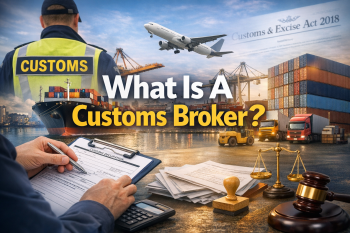
A customs broker plays a vital role in the safe, lawful, and efficient movement of goods across New Zealand’s border. They act on behalf of importers and exporters to ensure shipments meet all legal and regulatory requirements, helping goods move smoothly while reducing risk, delays, and compliance issues.
While modern digital systems have replaced much of the old paperwork, the core purpose of customs broking hasn’t changed: guiding businesses through complex border requirements and protecting them from costly mistakes.
What Does a Customs Broker Do?
Customs brokers manage the technical and legal aspects of moving goods across the border. Their work includes:
-
Preparing and lodging customs entries and documentation
-
Calculating duties, GST, and excise
-
Applying tariff classifications and trade rules
-
Communicating with border agencies such as New Zealand Customs Service
-
Resolving clearance issues and delays
-
Supporting clients to meet legal obligations
-
Managing compliance and risk
-
Coordinating with freight forwarders, carriers, ports, airlines, and logistics providers
Where Do Customs Brokers Work?
Customs brokers work across the supply chain, including:
-
Specialist customs brokerage firms
-
Freight forwarding companies
-
Shipping and airline companies
-
Large importing and exporting businesses
-
Independent clearance services
Some brokers specialise in particular industries (such as perishable goods or machinery), while others support a wide range of businesses.
Why Customs Brokers Are So Important?
International trade is becoming more complex. Tariff rules, free trade agreements, concessions, and compliance requirements change frequently. Skilled customs brokers help reduce risks such as:
-
Incorrect tariff classification
-
Undervaluation or misdeclared origin
-
Prohibited or restricted goods entering the country
-
Shipment delays and supply chain disruption
-
Penalties, audits, or investigations
By getting it right the first time, brokers save businesses time, money, and serious legal trouble.
Customs brokers work in a highly regulated environment and hold a position of trust, so ethical conduct is essential. This means acting honestly, protecting client confidentiality, avoiding conflicts of interest, submitting accurate information, and refusing unlawful requests, even under pressure. Strong ethics ensure lawful trade, protect government revenue, build trust in New Zealand’s customs system, and safeguard both brokers and their clients from legal risk.
CBAFF UUI Course
The CBAFF UUI Course is designed for people who wish to become users of the Joint Border Management Systems (JBMS) and obtain a Unique User Identifier (UUI), in accordance with NZ Customs Service regulations.
This in-depth training program covers everything you need to know about customs procedures, regulations, and documentation.
__________
Re-launched in February 2026, this refreshed programme develops practical capability across the full customs and border compliance framework - ideal for developing operators or strengthening technical depth within your team.
Consisting of eight modules, this revitalised training is intentionally designed around three stages of learning progression:
- Cognitive – Build strong foundations across customs legislation, border agencies, TSW, tariff classification, valuation, and origin
- Associative – Apply learning in practical scenarios: preparing entries, managing TSW messages, and resolving compliance issues
- Autonomous – Operate independently: managing UUI, preparing compliant entries, coordinating with agencies, and applying professional standards consistently
Training Modules
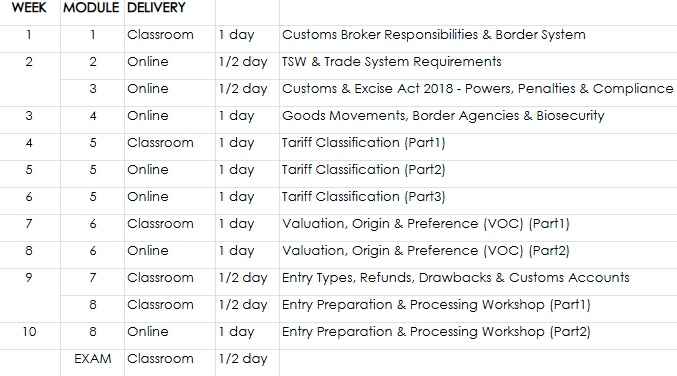
Shown below is a matrix outlining the training modules, duration and other programme details.
Wider Auckland: the programme now includes a hybrid delivery model, as indicated below.
The rest of the country: the programme is available as a fully online model; however, the examination remains classroom-based and is held in Auckland.
Training is completed at IVS Training Centre, near the Auckland airport.
To earn a CBAFF Customs UUI Course Certificate, you must complete Modules 1-10, pass practical assignments, achieve an 80% pass mark on the final exam, and fulfill all payment requirements.
PLEASE NOTE:
Successful completion of CBAFF training courses and passing the associated assessments and exams is not a guarantee of the issuance of a UUI by NZ Customs – it is one component of NZ Customs’ criteria.
NZ Customs will not issue a UUI to persons not actively engaged in the industry as the lodgement of Customs entries require linking users to an employer and clients.
What's next?
Once you have completed and passed the CBAFF UUI Course you will need to contact NZ Customs to become users of the Joint Border Management Systems (JBMS) and obtain a Unique User Identifier (UUI), in accordance with NZ Customs Service regulations.



RSS Facebook Email Linkedin Contact Member Feedback